

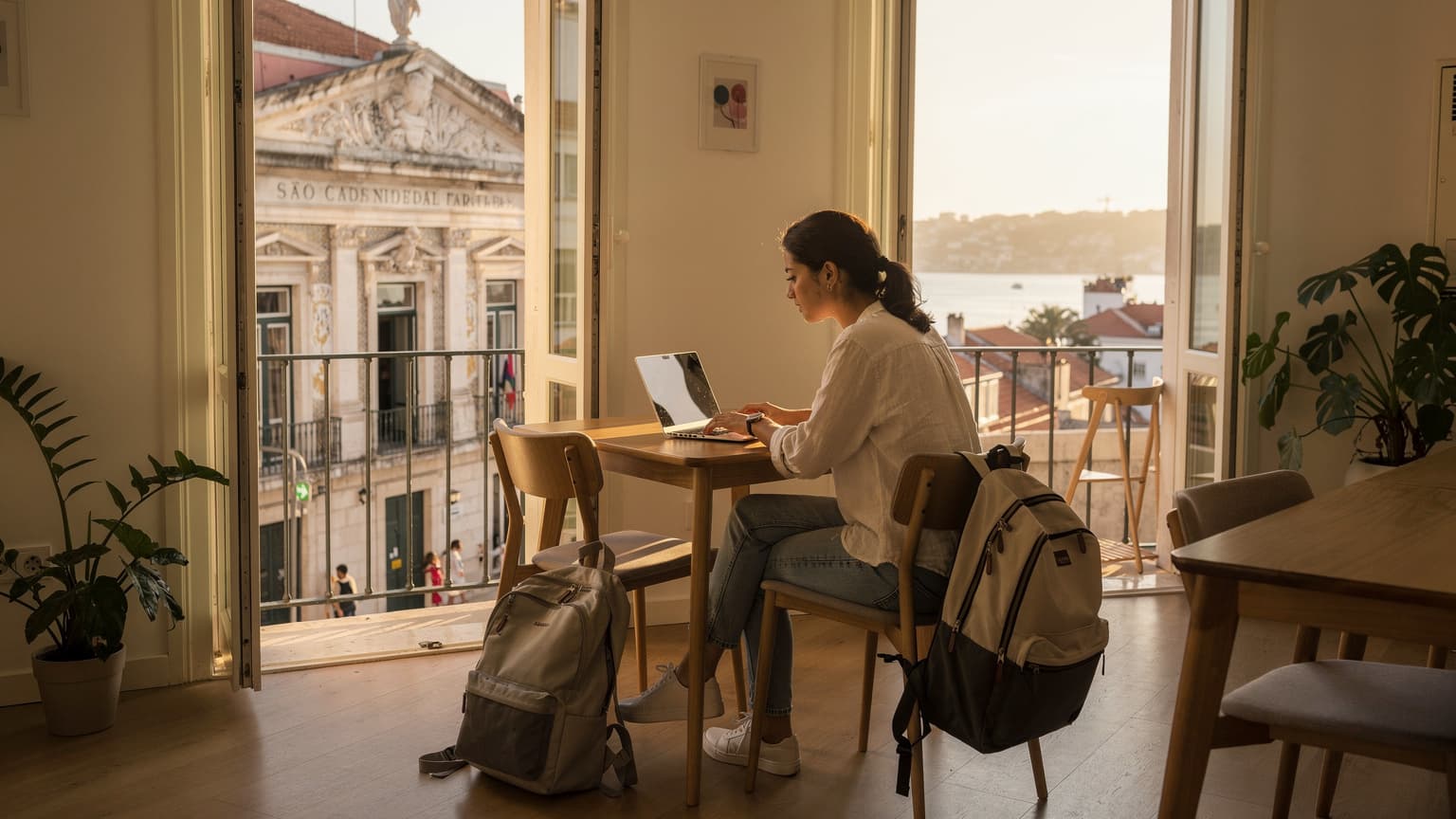
Lisbon Calling: Why Digital Nomads Flock Here
It was a rainy Tuesday in February, not exactly postcard weather, but even then, the charm of Lisbon was undeniable. I'd just landed from a red-eye into Humberto Delgado Airport, navigated the Metro's Linha Vermelha to São Sebastião, and found myself bleary-eyed in a co-working space in the Estefânia neighbourhood. The espresso was strong, the Wi-Fi was, well, 'okay,' and the conversations around me were a mash-up of Portuguese, English, and German. This city truly pulls people in.
Lisbon isn't just a pretty face with its seven hills and Fado music, it's a strategic hub. The time zone, GMT+1, is often a sweet spot for those juggling clients in both North America and Europe. Rent in neighbourhoods like Arroios or Anjos, while rising, still offers better value than many other European capitals. Beyond the economics, there's a tangible energy, a creative hum that makes even a mundane spreadsheet feel less, well, mundane. The government's digital nomad visa initiatives, though they have their quirks, signal a welcoming environment for remote workers. (Just don't forget the NIF, or tax identification number, it's crucial for everything from opening a bank account to getting a local SIM, or so I learned the hard way trying to buy a local number on a Sunday at a Vodafone store in Baixa, only to find out they close at 2 PM.)

The Allure of Lisbon: More Than Just Sunshine
Sure, the sun shines more often here than in London, and the pastéis de nata from Manteigaria are legendary, but the real draw for digital nomads runs deeper. It's the blend of old-world charm and burgeoning tech scene. You can spend your morning coding in a modern co-working space in Alcântara and your afternoon wandering the labyrinthine streets of Alfama, soaking in centuries of history. The city's public transport, operated by Carris and Metro de Lisboa, is efficient, with the Viva Viagem card making rides on buses, trams, and the metro a breeze. A monthly pass will set you back around €40, which is a fraction of what you'd pay in Paris or Tokyo.
Community and Networking for Remote Professionals
The digital nomad community here isn't just large, it's active. Meetups happen several times a week, from casual drinks in Cais do Sodré to structured skill-share sessions in Príncipe Real. I once stumbled upon a 'pitch practice' event at a café near Praça do Comércio that led to a surprising collaboration. These aren't just social gatherings, they're genuine networking opportunities. Having reliable data, an eSIM for Paris, Tokyo & Beyond 2026, means you're always connected, whether you're coordinating with new contacts on WhatsApp or quickly checking a LinkedIn profile before a coffee meeting.
The 5G Advantage for Remote Work
Forget the days of hunting for reliable Wi-Fi. My first few months on the road were a constant battle with dodgy café connections, dropped video calls, and the sheer panic of an unsaved document. Lisbon, thankfully, has a robust 5G infrastructure, especially within the city limits. But you need to leverage it effectively.
For a digital nomad, 5G isn't a luxury, it's a necessity. Think about it: a crucial client video conference, large project files that need uploading to a cloud server, or even just streaming high-definition tutorials. These tasks devour bandwidth, and a shaky connection can cost you time, money, and professional credibility. I remember a particularly stressful morning in Barcelona, trying to upload a 2GB video file for an event from a café in Gràcia, only to have the Wi-Fi cut out repeatedly. It took me three hours longer than it should have. That's three hours I could have spent exploring Park Güell.
Speed and Stability: What 5G Delivers
With 5G, you're looking at theoretical speeds of up to 10 Gbps, though in real-world Lisbon, you'll more likely see sustained speeds of 200-500 Mbps. That's still incredibly fast, often outperforming hotel Wi-Fi. More importantly, 5G offers lower latency, which means less delay in communication. For video calls, this translates to smoother conversations without those awkward 'can you hear me now?' moments. For large file transfers, it means minutes instead of hours. Carriers like MEO, Vodafone Portugal, and NOS have invested heavily in their 5G networks, with excellent coverage across central Lisbon neighbourhoods like Baixa-Chiado, Bairro Alto, and Parque das Nações.
Bypassing Wi-Fi Bottlenecks
Public Wi-Fi networks, even in co-working spaces, can be congested, especially during peak hours. Everyone's trying to do something bandwidth-intensive. Your personal 5G connection via an eSIM effectively creates your own private, high-speed hotspot, bypassing these shared network limitations. This is particularly vital when you're working on sensitive data, as a private connection is inherently more secure than an open Wi-Fi network. I've heard too many stories of compromised data due to unsecured public networks, a risk no professional should take.
Choosing Your eSIM Plan: Uncapped Data is Key
When I first started using eSIMs, I made the mistake of opting for plans with seemingly generous but ultimately restrictive data caps. I quickly learned that '20GB for 30 days' sounds like a lot until you're uploading a client presentation or spending an afternoon on video calls. For a serious digital nomad, especially one needing to transfer large files or stream consistently, uncapped 5G data is the only sensible choice.

The Perils of Data Caps
Imagine you're on a critical video call with a client in New York (6 PM in Lisbon, 1 PM in NYC), discussing a project deadline. Suddenly, your data runs out. Not ideal. Or you're trying to send a 500MB design brief to a team member in Berlin, and your connection throttles because you've hit your daily fair-use limit. These are real frustrations that disrupt workflow and cause stress. I once had a 10GB plan for a month in Vietnam, and after just two weeks of normal work, I was frantically searching for local top-up cards in Hanoi's Old Quarter, trying to decipher Vietnamese instructions. Never again.
What to Look For in an eSIM for Lisbon
When selecting your Portugal eSIM, prioritize these features:
- Uncapped 5G Data: This is non-negotiable for true productivity. Look for plans that genuinely offer unlimited data at 5G speeds, or at least a very high threshold before any speed reduction.
- Network Compatibility: Ensure the eSIM works with Portugal's major carriers, like MEO, Vodafone Portugal, or NOS, which have the best 5G coverage.
- Flexibility: The ability to activate and manage your eSIM entirely digitally is crucial. You don't want to be hunting for physical SIM cards or dealing with local carrier bureaucracy.
- Multi-Country Options: If Lisbon is just one stop on a larger European tour, consider a regional or global eSIM that covers multiple countries, like the options for a Family World Tour 2026: One eSIM Plan to Connect Cape Town to Sydney.
Comparison of eSIM Providers for Lisbon
| Provider | Data Plan Highlight | Network Speed | Key Benefit for Nomads |
|---|---|---|---|
| WorldESIM Portugal Unlimited | Unlimited 5G Data | High-speed 5G (up to 500 Mbps typical) | True peace of mind, no data caps, robust local carrier partnership. |
| Local Carrier X (e.g., MEO eSIM) | Various data packages (e.g., 50GB/month) | 5G where available | Local number, but often requires more setup, data caps. |
| Global eSIM Provider Y | Tiered data plans (e.g., 30GB/30 days) | Varies by region and carrier partnership | Good for short trips, but data caps can be limiting for heavy use. |
Setting Up Your Lisbon eSIM: A Step-by-Step Guide
Getting an eSIM up and running is thankfully a far cry from the old days of queuing at airport kiosks or trying to find a corner store that sells SIM cards. The process is streamlined, digital, and usually takes just a few minutes. I've done this dozens of times, from Narita Airport in Tokyo to King Shaka International in Durban, and it's almost always a smooth experience.

Pre-Arrival Preparation
The beauty of an eSIM is that you can set it up before you even leave home. This means you land in Lisbon already connected, ready to hail a Bolt (local ride-sharing app, similar to Uber) to your Airbnb in Graça or check the schedule for the Metro de Lisboa without scrambling for Wi-Fi. My personal rule is always to activate my eSIM while I'm still on my home Wi-Fi, just in case there are any hiccups.
- Check Device Compatibility: Ensure your smartphone (iPhone XS or newer, most Samsung Galaxy S20 series or newer, Google Pixel 3a or newer, etc.) supports eSIM technology. A quick Google search for 'your phone model + eSIM compatibility' should confirm this.
- Purchase Your eSIM Plan: Head to the WorldESIM website and choose your desired Lisbon/Portugal plan, prioritizing uncapped 5G data.
- Receive Your QR Code: After purchase, you'll typically receive an email with a QR code or manual activation details. Keep this handy.
On-Device Activation Process
Once you have your QR code, the activation is straightforward. The exact steps might vary slightly depending on your phone's operating system (iOS or Android), but the general flow is the same.
- Access Cellular Settings: On an iPhone, go to Settings > Cellular > Add eSIM. On Android, it's typically Settings > Network & Internet > SIMs > Add more.
- Scan QR Code: Your phone's camera will open. Scan the QR code provided by WorldESIM. If you can't scan, there's usually an option to enter details manually.
- Follow Prompts: Your phone will guide you through adding the cellular plan. You might be asked to label your plans (e.g., 'Primary' for your home SIM, 'Portugal' for your eSIM) and choose which line to use for data, calls, and texts. Set your eSIM as the primary for data.
- Enable Data Roaming (if necessary): For some eSIMs, you might need to enable data roaming for the eSIM profile to work. This is usually specified in the provider's instructions. Rest assured, with a WorldESIM plan, this won't incur additional roaming charges, as your data is already paid for.
- Connect to Network: Your phone should automatically connect to a local Portuguese network (MEO, Vodafone, or NOS). You'll see the network name appear in your status bar.
Navigating Lisbon Like a Local with Your eSIM
With your uncapped 5G eSIM humming along, Lisbon truly opens up. You're not just connected, you're empowered to explore with confidence, from the winding streets of Alfama to the modern waterfront of Parque das Nações. This isn't just about avoiding getting lost, it's about embracing serendipity.
Real-Time Transit and Mapping
Forget paper maps. Using Google Maps or Citymapper (which is excellent for Lisbon's public transport, including the famous Tram 28) in real-time is a game-changer. You can see when the next Carris bus is arriving at your stop in Estrela, or if the Linha Verde Metro is experiencing delays. I rely on these apps constantly. I remember once trying to navigate the extensive JR East network in Tokyo without real-time data, relying on cached maps, and it was a mess. A constant, fast connection means you're always on schedule, or at least quickly able to adapt if something changes.
Local Apps and Services
Lisbon has a thriving app ecosystem that makes daily life easier:
- Bolt/Uber: Essential for ride-sharing, especially late at night or when the hills are too much.
- Glovo/Uber Eats: Food delivery from your favourite local spots.
- MB WAY: A popular Portuguese payment app, though less critical for short-term visitors.
- CP App: For checking train schedules if you plan to explore beyond Lisbon, perhaps a day trip to Sintra or Cascais.
Having consistent data ensures these apps load quickly and function flawlessly, whether you're ordering a late-night snack to your apartment in Santos or checking the train times from Rossio Station.
Productivity Hotspots and Connectivity Strategies
Lisbon offers a diverse range of environments for digital nomads, from bustling co-working spaces to tranquil cafes. The key is knowing how to optimize your connectivity in each. An uncapped 5G eSIM means you're not reliant on the spotty Wi-Fi of a charming but old-school café in Mouraria.
Co-working Spaces and Dedicated Offices
Lisbon boasts numerous excellent co-working spaces. Second Home Lisboa (Mercado da Ribeira/Time Out Market) is fantastic for its vibrant atmosphere and river views, though its Wi-Fi can sometimes struggle with the sheer volume of users. Avila Spaces (Saldanha) offers a more corporate, reliable environment. Residing in these spaces often gives you access to their dedicated, high-speed internet, but having your eSIM as a backup, or even primary connection, is a smart move. I often run my video calls on my eSIM even in co-working spaces, just for that extra layer of stability.
Cafes and Public Spaces
Lisbon's café culture is legendary, and many offer Wi-Fi. However, speeds vary wildly. Fábrica da Nata (Baixa) offers free Wi-Fi, but it's often overwhelmed. Better bets for focused work might be less touristy spots in areas like Alvalade or Areeiro. With your eSIM, any café becomes a potential office. You can enjoy your Galão and work without the nagging worry of a dropping connection. I've had many productive afternoons working from a bench in Parque Eduardo VII, tethering my laptop to my phone's 5G connection.
Maximizing Battery Life with 5G
Running 5G constantly, especially when tethering, can drain your phone's battery faster. A portable power bank is an essential accessory for any digital nomad. Look for one with a high capacity (10,000 mAh or more) and fast-charging capabilities. I always carry two, having learned my lesson during a major power cut in Buenos Aires, leaving me with no way to charge my phone for a crucial flight booking.
Beyond Lisbon: eSIM for Portuguese Adventures
Portugal is a country begging to be explored, and your eSIM isn't just for city slicking. Whether you're chasing waves in Ericeira, exploring the historic university town of Coimbra, or relaxing on the beaches of the Algarve, your WorldESIM will keep you connected.
Day Trips and Weekend Escapes
Picture this: you've finished your work for the week and decided on a last-minute trip to Porto. With your eSIM, you can book your train tickets via the CP app on the Alfa Pendular service, check hotel availability, and map out your walking tour of the Ribeira district, all while on the move. There's no need to worry about losing connectivity as you travel between cities. I've used the same logic for Prague Christmas Markets 2026: Bypass £10 Daily Roaming with an eSIM, ensuring seamless navigation even in festive crowds.
Maintaining Connectivity in Rural Areas
While 5G coverage is concentrated in urban centres, Portugal's 4G LTE network is extensive, reaching most towns and even many rural areas. Your WorldESIM plan will seamlessly switch to 4G where 5G isn't available, ensuring you remain connected even when you're off the beaten path, perhaps hiking in the Serra da Arrábida or exploring a quiet village in Alentejo. This consistent coverage is something you rarely get with local pay-as-you-go SIMs, which often have weaker rural partnerships.
Troubleshooting Common eSIM Challenges
Even with the most reliable tech, sometimes things go sideways. I've been there, staring at a 'No Service' message, wondering if my phone has finally decided to retire. Most eSIM issues are minor and easily fixable, especially when you know the common culprits.
No Service or Slow Speeds
If you're seeing 'No Service' or your speeds are unexpectedly slow, here's a quick checklist:
- Check Data Roaming: Double-check that data roaming is enabled for your eSIM profile in your phone's cellular settings. This is a common oversight.
- Network Selection: Sometimes, your phone might latch onto a weaker network. Try manually selecting a network operator (MEO, Vodafone, or NOS) in your cellular settings.
- Restart Your Device: The classic IT fix often works wonders. A simple restart can refresh your network connection.
- APN Settings: In rare cases, you might need to manually configure APN (Access Point Name) settings. WorldESIM provides these in their support documentation, but they're usually auto-configured.
Contacting Support
If you've exhausted the self-help options, don't hesitate to contact WorldESIM support. They are equipped to handle eSIM-specific issues and can often diagnose problems remotely. It's always a good idea to have a backup plan, like using a café's Wi-Fi briefly to reach out, if your data isn't working at all. You can also review the WorldESIM FAQ for common solutions and tips.
Real-World Scenarios: How an eSIM Saves the Day
It's one thing to talk about theoretical speeds, and another to see how an uncapped 5G eSIM truly impacts the daily grind of a digital nomad. These aren't just hypotheticals, these are the situations that define productivity on the road.
The Urgent Video Conference from a Moving Tram
I once had an urgent call with a client in Los Angeles that I couldn't reschedule. I was on the famous Tram 28, heading through the narrow streets of Alfama, when the call came in. Instead of frantically searching for a static Wi-Fi spot, I simply connected my laptop to my phone's 5G hotspot. The call was crystal clear, with minimal latency, even as we rattled past Miradouro das Portas do Sol. Try doing that on public Wi-Fi.
Large File Transfers on the Go
A few months ago, I was collaborating on a high-resolution design project. The final files, totaling over 3GB, needed to be uploaded to a shared drive before a looming deadline. I was between meetings, grabbing a quick lunch near the LX Factory in Alcântara. Instead of waiting until I was back at my apartment, I simply used my phone's 5G connection to upload the files. It took about 15 minutes, allowing me to meet the deadline without stress and enjoy the rest of my afternoon browsing the artisan shops. This kind of flexibility is priceless for remote workers, especially those who deal with media-rich content.
Seamless Updates and Cloud Syncing
Keeping all your devices updated and your cloud storage synced is crucial for data integrity and security. With an uncapped 5G eSIM, I can set my phone to automatically sync my photos to Google Photos, update apps in the background, and ensure all my work documents are backed up to Dropbox, all without worrying about hitting a data limit or slowing down a shared Wi-Fi network. This allows for a truly hands-off, secure workflow, whether I'm in Lisbon or exploring the Southeast Asia Cruise 2026: Navigating Island Hops with the Right eSIM. It's the silent workhorse that keeps everything running smoothly.
| Task | Wi-Fi Dependence Risk | eSIM 5G Benefit |
|---|---|---|
| High-res Video Calls | Lagging, dropped connections, poor audio/video quality, security risks. | Stable, low-latency, secure connection for professional communication. |
| Large File Uploads/Downloads | Slow speeds, timeouts, corruption, long wait times. | Rapid transfers, efficient workflow, meeting deadlines on the go. |
| Cloud Syncing & Updates | Data caps on public Wi-Fi, background syncs disabled, security vulnerabilities. | Consistent, automatic backups and updates, enhanced data security. |
| Real-time Navigation & Local Apps | Maps not loading, public transport info outdated, ride-share apps failing. | Instant access to live data, seamless travel, local service utilization. |
Frequently Asked Questions
What is the typical 5G speed I can expect in Lisbon with an eSIM?
In central Lisbon, with a good 5G eSIM plan, you can typically expect speeds ranging from 200 to 500 Mbps. These speeds are generally more than sufficient for high-bandwidth activities like 4K streaming, video conferencing, and large file transfers.
Can I use my eSIM to tether my laptop for work in Lisbon?
Absolutely. One of the primary benefits of an uncapped 5G eSIM for digital nomads is the ability to use your smartphone as a personal hotspot. This allows you to connect your laptop or other devices to your high-speed 5G connection, ensuring productivity anywhere.
Will an eSIM work in more rural parts of Portugal outside of Lisbon?
While 5G coverage is concentrated in urban areas like Lisbon, your eSIM will seamlessly switch to Portugal's extensive 4G LTE network in more rural regions. This means you'll still maintain strong connectivity for most tasks, even when exploring beyond the city.
Is it better to get a local physical SIM card or an eSIM for a long stay in Lisbon?
For digital nomads, an eSIM often offers more flexibility and convenience. You can activate it before arrival, keep your home SIM active for calls/texts, and avoid local carrier bureaucracy. For uncapped 5G data, eSIM providers like WorldESIM often have superior plans compared to what's easily accessible via physical SIMs for short to medium-term stays.
What are the best neighbourhoods in Lisbon for digital nomads for good connectivity?
Neighbourhoods like Baixa-Chiado, Parque das Nações, and areas around Saldanha and Picoas generally have excellent 5G coverage and numerous co-working spaces. Even more residential areas like Arroios and Alcântara offer strong network performance, especially with a dedicated eSIM.
Will using an eSIM drain my phone battery faster when tethering?
Yes, running 5G constantly and tethering other devices will consume more battery. It's highly recommended to carry a high-capacity portable power bank (10,000 mAh+) to ensure your phone stays charged throughout your workday and explorations.