

The Myth of Truly Unlimited
Let's cut straight to it: 'unlimited' in the eSIM world is almost never truly unlimited, especially when you're abroad trying to upload a 4K video to YouTube or host a critical client call from a hostel in Medellín. I've been there, thinking I'd snagged a sweet deal, only to find my 'unlimited' plan crawl to 2G speeds after 10GB. It’s a marketing term, plain and simple, designed to get your attention before the asterisks kick in.
For a budget backpacker like me, who tracks every euro, this distinction is crucial. You’re not just buying a data plan, you’re buying peace of mind, or at least the ability to search for the cheapest night bus from Huaraz to Lima without buffering for five minutes. The cost of a few days of wasted 'unlimited' data can easily outweigh the savings from that cheap hostel bed. My rule of thumb: if it sounds too good to be true, it probably is. Always verify the fine print, because that's where they hide the limits.
Deciphering Marketing vs. Reality
Operators love the word 'unlimited'. It sells. But in practice, you're usually looking at a plan with a high-speed allowance, followed by a severe throttle. Think of it like a cheap all-you-can-eat buffet where after two plates, the quality drops off a cliff. For someone who needs reliable, consistent bandwidth for remote work, that drop-off is a deal-breaker. You need to know exactly when the tap gets turned down, and by how much.
The Impact on Digital Nomads and Power Users
If you're just checking WhatsApp and scrolling Instagram, a throttled plan might be annoying but manageable. But if you’re a content creator uploading daily vlogs, a developer pushing code, or a remote consultant on video calls, a sudden speed drop means lost productivity, missed deadlines, and potentially lost income. I spent 8 days in Northern Thailand last year, burning through about 5-7GB a day with work, costing me roughly €280 on data alone for what was marketed as an unlimited plan. That's a significant chunk of my €40/day budget. It really forces you to show the math: 6 GB consumed/day x 8 days = 48 GB total. Was that 'unlimited' plan truly unlimited for my 48 GB? Absolutely not.
Fair Usage Policies: The Fine Print
This is where the 'unlimited' facade crumbles. Every 'unlimited' eSIM plan comes with a Fair Usage Policy (FUP), whether it's buried in section 12.3 of their terms and conditions or dimly hinted at on the product page. These policies are the operator's way of saying, 'Sure, you can use as much data as you want, but if you use too much, we're going to slow you down, or even cut you off.'

Understanding Data Thresholds and Speed Reduction
The FUP will specify a certain amount of high-speed data, say 20GB, 50GB, or even 100GB. Once you hit that threshold, your speeds will be drastically reduced, often to 128 kbps or 256 kbps. To put that in perspective, 128 kbps is barely enough for WhatsApp messages, let alone a video call or uploading anything substantial. It's like going from a motorcycle on the autobahn to a bicycle with a flat tire. Some plans also have daily limits, like 2GB per day at high speed, then throttling until midnight. This can be even more restrictive, especially if you have a particularly data-heavy workday.
For instance, one 'unlimited' plan I tested in Vietnam throttled me after 30GB. The speeds dropped so much that even checking email was a chore. I ended up having to buy an additional local SIM from Viettel for 150,000 VND (about €5.50) just to get decent speeds for the rest of the month. That's an extra, unplanned expense that eats into the budget.
Geographical and Network-Specific Restrictions
FUPs aren't just about data volume. They can also vary based on the country you're in or even the specific network you're connected to. Some 'unlimited' global eSIMs might offer genuinely generous allowances in Western Europe but have tighter restrictions in parts of Southeast Asia or South America due to local network agreements or infrastructure limitations. Always double-check the specific country details, not just the overarching 'global' claim. You can typically find this info buried deep in the provider's support pages or FAQ section. It's often easier to find an answer to 'how do I set up my Pixel 9 eSIM' than to dig out the actual FUP for a specific country.
Speed Caps and Throttling: What to Expect
Beyond the FUP, some eSIM plans, even before hitting any 'unlimited' threshold, might have inherent speed caps. This isn't about fair usage, it's just how the plan is designed. They might cap your maximum download speed at, say, 50 Mbps, even if the local network is capable of 200 Mbps. For most casual users, 50 Mbps is plenty. But for a video editor trying to download large assets or a gamer streaming live, it can be a noticeable limitation.
Identifying Pre-Throttle Speed Limits
The only way to identify these pre-throttle speed limits is to scour the product description and, failing that, directly ask customer support. Look for phrases like 'up to X Mbps' or 'maximum theoretical speeds of Y Mbps'. If these aren't explicitly stated, assume the worst, especially for cheaper plans. A truly unthrottled experience will usually come at a premium, and providers are keen to highlight it when they offer it.
The Real-World Impact on Remote Work
Imagine this: you're working from a cafe in Bangkok, trying to upload a hefty file for a client. You've got 30GB left on your 'unlimited' plan, but the maximum speed is capped at 30 Mbps. While not terrible, it means that 10GB file is going to take a good hour to upload, tying up your bandwidth and your time. Contrast that with an actual unthrottled connection where you might hit 150 Mbps, getting that file up in minutes. Time is money, especially when you're working remotely.
| Plan Type | High-Speed Data (Approx.) | Speed After Threshold | Typical Use Case |
|---|---|---|---|
| Truly Unlimited (Rare) | No practical limit | Consistent high-speed | Heavy streaming, large file transfers, constant video calls |
| 'Unlimited' with FUP | 20GB - 100GB | 128-256 kbps (2G speeds) | Light browsing, social media, email, messaging |
| Capped Data Plans | 1GB - 50GB | No service or extra charges | Limited browsing, emergencies, short trips |
Regional Variations: eSIM Performance by Country
An eSIM isn't a magic bullet that performs identically everywhere. Network infrastructure, local regulations, and partnerships dictate a lot. What works flawlessly in Western Europe might be a stuttering mess in parts of rural Asia or Africa. I've learned this the hard way trying to get a stable connection on night trains across Eastern Europe, or along the coast of Peru while trying to find an eSIM for Lima and Machu Picchu.
Asia-Pacific eSIM Landscape
The APAC region is a mixed bag. Countries like South Korea, Japan (where you can easily grab a Tokyo Airport eSIM), and Singapore boast some of the fastest and most reliable networks globally. Here, 'unlimited' plans, even with FUPs, tend to offer more generous high-speed allowances and less aggressive throttling. However, in emerging markets like Laos, Cambodia, or even parts of India, network coverage can be spotty, and speeds generally lower. An eSIM provider's ability to roam on multiple local networks in these areas can be a lifesaver.

Europe and North America
In Europe, particularly the EU, data roaming regulations mean more consistent experiences. Many 'unlimited' regional eSIMs will give you solid performance, though FUPs still apply. The infrastructure is generally robust, especially in major cities. North America, especially the US, is a different beast. While speeds can be very high, coverage in rural areas can drop off fast. Plus, 'unlimited' plans from US carriers are notorious for aggressive deprioritisation during peak times, even before you hit any FUP. This means your data speeds can drop simply because the network is busy, even if you haven't used much data.
Latin America and Africa
These regions often present the biggest challenge. While major cities in countries like Mexico, Brazil, or South Africa have decent 4G/5G, venturing off the beaten path can mean no signal at all. 'Unlimited' plans here are usually very limited in their high-speed allowance, and local SIMs often provide better value and coverage for extended stays. Always check coverage maps from the local carriers that the eSIM provider partners with before committing.
Data Consumption Benchmarks for Digital Nomads
Before you can pick an 'unlimited' plan, you need to understand your own data habits. This isn't guesswork, it's budgeting. Just like I know my daily spending on accommodation and food, I track my data use. It's the only way to avoid nasty surprises. Here's what I've seen:
| Activity | Estimated Data Consumption (per hour) | Typical Use Case for Nomads |
|---|---|---|
| Video Conferencing (HD) | ~1 GB | Client calls, team meetings (Zoom, Google Meet) |
| Video Streaming (HD) | ~3 GB | Netflix, YouTube (after work) |
| Large File Upload/Download | Variable (10GB+ per file) | Creative work, software updates, backups |
| Web Browsing & Email | ~50-100 MB | Research, administrative tasks |
| Social Media & Messaging | ~100-200 MB | Keeping in touch, casual browsing |
Calculating Your Daily and Monthly Needs
Let's do the math. If you're doing 2 hours of video calls, 1 hour of streaming, and 3 hours of browsing/email per day, that's roughly:
- Video Calls: 2 hours x 1 GB/hour = 2 GB
- Streaming: 1 hour x 3 GB/hour = 3 GB
- Browsing/Email: 3 hours x 0.1 GB/hour = 0.3 GB
- Total Daily: ~5.3 GB
- Total Monthly: 5.3 GB/day x 30 days = ~159 GB
Suddenly, that 'unlimited' plan with a 50GB FUP doesn't look so unlimited, does it? This calculation is crucial. It shows you exactly why you need a high-allowance plan if you're a heavy user. Without this, you're just guessing, and guessing usually costs you more.
Tips for Reducing Data Consumption
Even with a generous plan, smart data usage can save you headaches and cash:
- Download offline content: Movies, maps, music, documents. Do it on Wi-Fi.
- Compress files: Before uploading, use tools to reduce file size.
- Lower streaming quality: 720p is often fine for Netflix on a laptop.
- Disable auto-updates: Apps and OS updates can chew through gigabytes without you noticing.
- Monitor usage: Your phone's settings will show you which apps are data hogs.
Picking the Right Plan: A Tactical Approach
Choosing an eSIM isn't about finding the cheapest option, it's about finding the best value for your specific needs, especially for remote work. This means digging deeper than the 'unlimited' label.
What to Look For in an eSIM Plan:
- Explicit FUP Details: Does the provider clearly state the high-speed data allowance before throttling? What are the throttled speeds?
- Network Partners: Who are the local carriers the eSIM roams on? Check their coverage maps for the specific areas you'll be in. A multi-network eSIM is generally better, offering redundancy.
- Validity Period: Does the plan last for your entire trip, or will you need to top up? Look for 30-day or 60-day options if you're staying longer.
- Customer Support: If something goes wrong, how do you get help? 24/7 chat support is invaluable when you're in a different time zone.
- Top-Up Options: Is it easy to add more data if you run out? Can you top up with a different type of plan, or are you locked into the same 'unlimited' structure?
For instance, if I'm heading to Bali for a month of intense work, I'd prioritize a plan with at least 100GB of high-speed data, even if it costs a bit more. The peace of mind knowing I won't be throttled mid-upload is worth the extra €20. You can compare country-specific options and FAQs directly on the main site, for example, by checking data plans for Australia if you're planning a trip there for the Rugby World Cup.
Step-by-Step Selection Process:
- Assess Your Data Needs: Use the benchmarks above to estimate your daily and monthly data consumption. Be realistic, not hopeful.
- Research Providers: Look at reviews specifically from other digital nomads or heavy data users for the regions you're visiting.
- Compare FUPs: Directly compare the high-speed data thresholds and post-FUP speeds. Don't just look at the price.
- Check Coverage Maps: Verify that the eSIM's partner networks have strong coverage in your key locations.
- Read the FAQs: Providers often hide crucial details in their frequently asked questions. Don't skip this. A lot of questions about activating services, for example, are answered in our FAQ section.
- Purchase and Activate: Install the eSIM and test it immediately upon arrival, preferably while still connected to Wi-Fi.
When a Local SIM Still Wins the Budget Battle
Despite the convenience of eSIMs, there are still scenarios where a physical local SIM card is the smarter, cheaper option, especially for the truly budget-conscious backpacker. I've often found myself holding both an active eSIM and a local SIM, using the latter for heavy data in one country, and the former for quick border crossings or short stays.
Cost Comparison: eSIM vs. Local SIM
Generally, local physical SIMs offer more data for less money, particularly if you're staying in one country for an extended period (say, over two weeks). For example, in Indonesia, a 30-day Telkomsel SIM with 50GB can cost around 150,000 IDR (approx. €9), while a comparable eSIM might be €25-€35. That's a significant difference if you're trying to keep your daily expenses under €40. The trade-off is the hassle of buying, registering, and installing a physical SIM, which can involve visiting a store, showing your passport, and dealing with language barriers.
Border-Crossing Edge Cases and Connectivity
This is where eSIMs shine. Crossing from Thailand into Laos, for example, or from Albania into Montenegro, an eSIM provides seamless connectivity the moment you step over the border. With a local SIM, you'd be offline until you find a vendor, buy a new card, and get it activated. This might mean being without navigation or emergency contact for hours. For short hops or complex itineraries involving multiple countries in quick succession, an eSIM is indispensable. For longer stays in a single country, or when you know you'll be settled in a major city for a few days, a local SIM is often the better value for bulk data.
I remember crossing from Peru to Bolivia via the Desaguadero border post. My global eSIM kept me connected, letting me navigate the notoriously chaotic border formalities and find my pre-booked transport, while others were scrambling for local SIMs. That's a small win, but a critical one when you're carrying all your gear and dealing with a new currency and language.

How to Optimize a Hybrid Approach
My strategy is often a hybrid: a reliable, smaller-data regional eSIM for emergencies, navigation, and initial arrival, coupled with a local physical SIM for the bulk of my data needs in specific countries where I plan to stay longer. This gives me the best of both worlds: immediate connectivity and budget-friendly bulk data. When I was in Bali's digital nomad scene, I used a local SIM for my daily work but kept an eSIM active for when I travelled to other islands.
Troubleshooting Common eSIM Connectivity Issues
Even the best plans can hit a snag. Knowing how to troubleshoot common eSIM issues can save you hours of frustration and potentially get you back online faster than waiting for customer support.
- No Service/No Data:
- Check APN Settings: Sometimes, the APN (Access Point Name) isn't configured automatically. Your eSIM provider's instructions will usually list the correct APN.
- Restart Your Phone: The oldest trick in the book, but it often works to force a network re-registration.
- Toggle Airplane Mode: Turn it on for 30 seconds, then off. This can also force your phone to reconnect to the network.
- Ensure Roaming is Enabled: For some eSIMs, data roaming needs to be explicitly turned on in your phone settings.
- Slow Speeds:
- Check for FUP Throttling: Have you hit your high-speed data limit? This is the most common reason for sudden slowdowns.
- Network Congestion: Are you in a very crowded area (like a festival or a busy market)? Network congestion can temporarily slow down even unthrottled connections.
- Change Network Selection: If your eSIM supports multiple networks, manually try selecting a different available carrier in your phone's settings.
- Installation Problems:
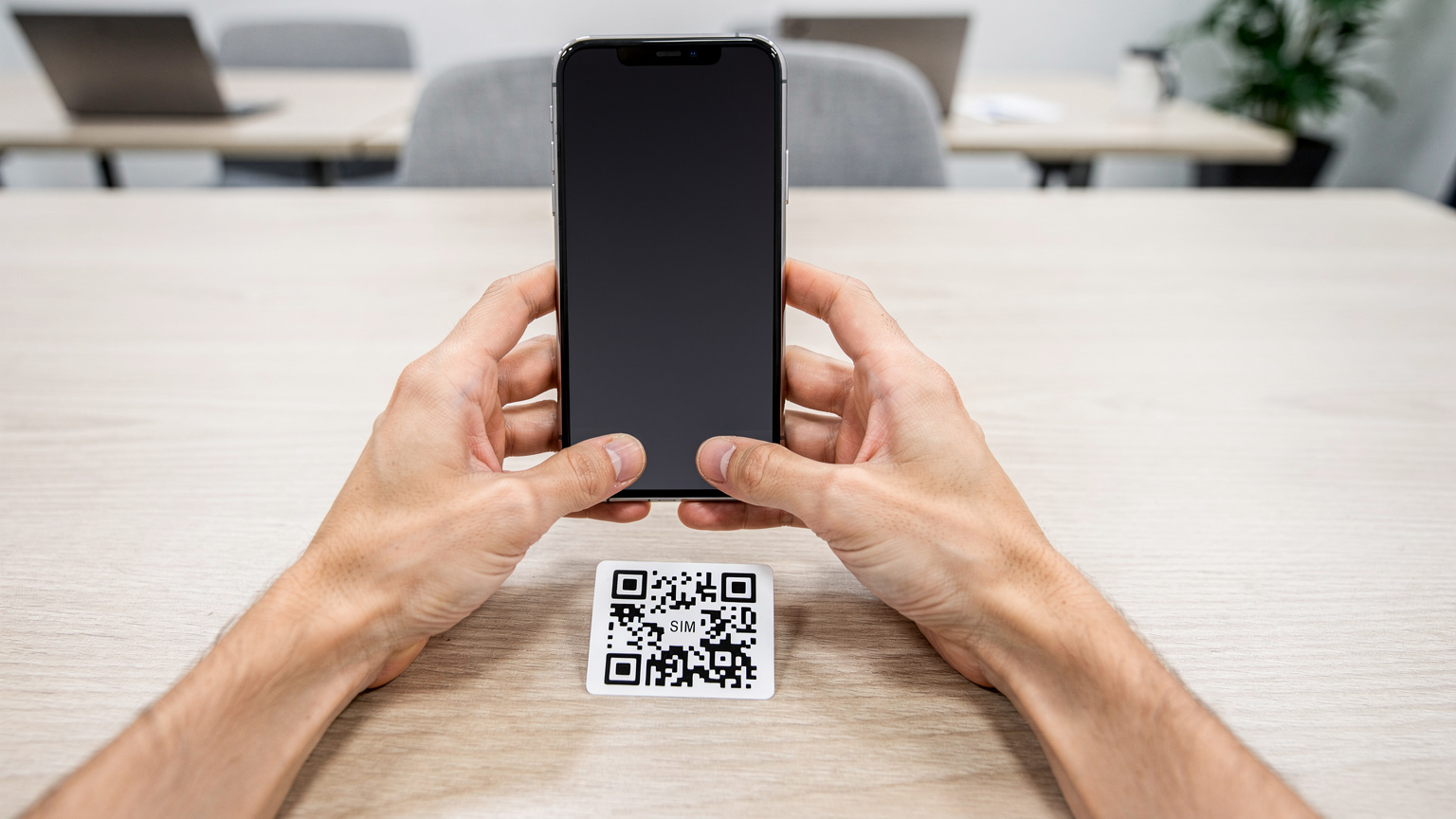
- Re-scan QR Code: If the initial installation failed, try rescanning the QR code (if applicable) or re-entering the manual details.
- Strong Wi-Fi Connection: Ensure you have a stable Wi-Fi connection when installing the eSIM, as it needs to download configuration files.
The Future of Unlimited eSIM for Remote Work
As 2027 rolls on, the landscape for 'unlimited' eSIMs is still evolving. We're seeing more providers offering higher FUP thresholds and better transparency. The demand from digital nomads and remote workers for reliable, high-bandwidth global connectivity is only growing, pushing carriers to adapt.
Emerging Trends:
- Higher FUPs: Expect to see 'unlimited' plans with 100GB+ high-speed allowances becoming more common, especially in developed markets.
- Better Transparency: As consumers become savvier, providers will be forced to be clearer about their FUPs and speed caps, making it easier for us to choose.
- Multi-Network Aggregation: eSIMs that can automatically switch between multiple local carriers for optimal signal and speed will become standard, improving reliability, especially in challenging regions.
- Dynamic Pricing: We might see more flexible plans where you can dynamically 'buy up' to higher speeds or data allowances for a short period when you need it, rather than being stuck with a throttled connection.
The ideal scenario for a remote worker is a truly unthrottled, consistently high-speed global eSIM. While we're not quite there yet, the trend is moving in the right direction. For now, it's about being smart, doing your homework, and understanding that 'unlimited' is a starting point for investigation, not a guarantee of endless data. Always scrutinise the small print, compare with local alternatives, and always, always know your data budget.
Frequently Asked Questions
What does 'unlimited' really mean for eSIMs in 2027?
In 2027, 'unlimited' eSIMs almost always come with a Fair Usage Policy (FUP). This means you get a set amount of high-speed data, typically between 20GB and 100GB, after which your speeds are significantly throttled, often to 128-256 kbps, which is too slow for most remote work tasks.
How can I tell if an eSIM plan has hidden speed caps or throttling?
Look for explicit details in the plan's terms and conditions or FAQ section regarding Fair Usage Policies, data thresholds, and post-threshold speeds. If these aren't clearly stated, directly contact customer support. Also, check reviews from other power users in your destination country.
Is a local physical SIM always cheaper than an eSIM for long-term remote work?
For extended stays (over two weeks) in a single country, a local physical SIM often offers more data for a lower price. However, eSIMs provide superior convenience for border crossings and multi-country trips, eliminating the need to search for local vendors and deal with activation processes.
How much data do digital nomads typically use per month?
Digital nomads engaged in heavy remote work, including video calls, large file transfers, and streaming, can easily consume 100GB to 200GB or more per month. Lighter users might get by with 30-50GB, but it's crucial to calculate your personal usage based on daily activities.
What's the best strategy for staying connected while crossing multiple borders?
A hybrid approach is often best: use a global or regional eSIM for seamless connectivity during border crossings and initial arrivals. Supplement this with a local physical SIM in countries where you plan longer stays to get better value for high-volume data needs. This ensures you're never completely offline.
What are common reasons for slow eSIM speeds, even with data remaining?
Slow speeds can be due to hitting your plan's Fair Usage Policy threshold, network congestion in crowded areas, or an inherent speed cap on your plan. You can try manually selecting a different network in your phone settings if your eSIM supports multiple local carriers.